
Choosing vape juice should not be about trusting the loudest brand name or the most attractive flavor label. If you care about what you are inhaling, the better question is not “Which vape juice is completely safe?” The better question is: Which product gives me the fewest unknowns?
No vape juice can honestly be described as risk-free. Vaping products still involve inhaling heated aerosol, and regulations are designed to reduce known risks rather than prove that a product is completely safe. A safer choice means checking what you can verify before buying: ingredients, market compliance, batch traceability, lab reports, and whether the juice matches your device.
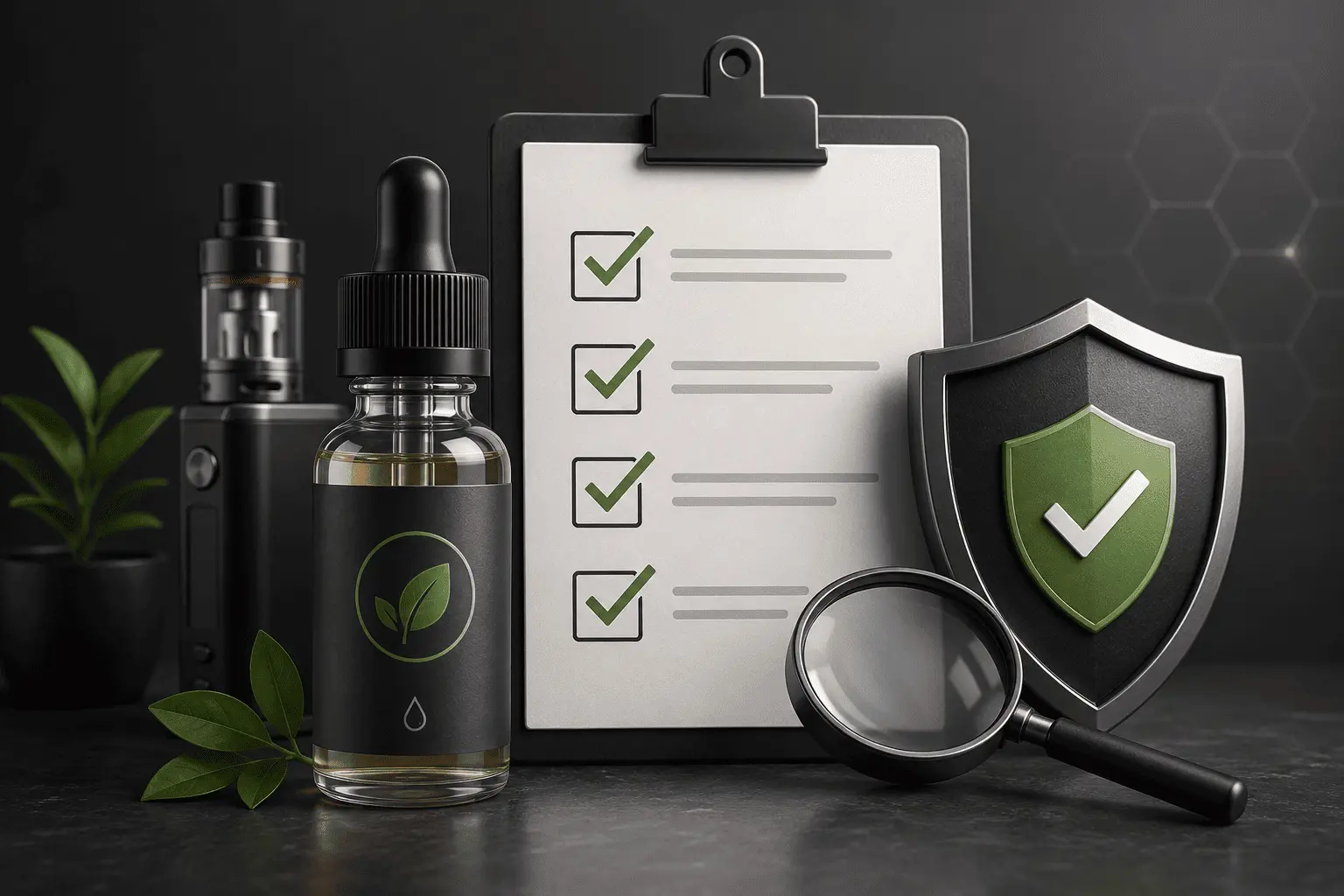
At Get Vape Puff, we screen products for wholesale buyers across different markets, including Europe, the United States, and Australia. The most common mistake we see is simple: buyers trust the front of the package instead of checking the information behind the product.
This guide gives you a practical checklist you can use before buying vape juice, whether you are a consumer, retailer, or wholesale buyer.
What Does “Safer Vape Juice” Actually Mean?
“Safer” does not mean “safe.” It means a product has fewer hidden risks and fewer unanswered questions.
A safer vape juice should have:
- A clear ingredient list
- Proper nicotine strength for your market
- Market-specific compliance information
- Batch or lot number
- Manufacturer traceability
- Lab report or COA access when available
- No known harmful additives listed
- VG/PG ratio suitable for your device
The goal is not to eliminate every possible risk. The goal is to reduce the risks you can control before inhaling.
| What You Check | Why It Matters | Red Flag |
|---|---|---|
| Full ingredient list | You know what you are inhaling | “Proprietary blend” or missing ingredients |
| Regulatory status | Product fits your market rules | Vague “certified” claim with no proof |
| Batch number | Product can be traced | No batch, lot, or production code |
| Lab report / COA | Ingredients and purity can be verified | Seller refuses documentation |
| VG/PG ratio | Juice matches your device | Ratio missing or incompatible |
| Nicotine strength | Prevents unsuitable use | Unclear nicotine type or level |
The more information a product gives you, the fewer assumptions you have to make.
Check the Ingredient List First
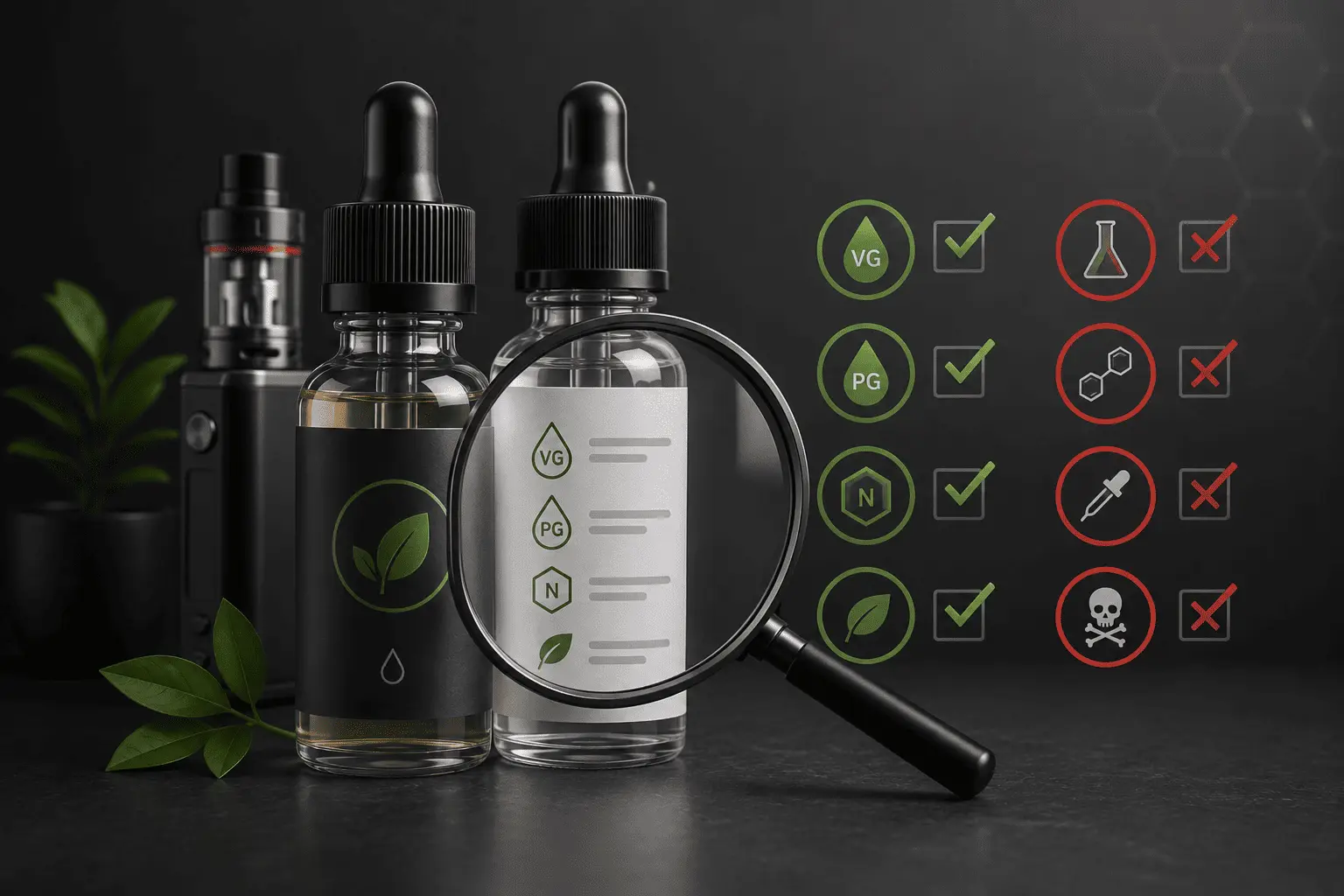
The ingredient list is the first thing you should check. A basic vape juice usually contains vegetable glycerin, propylene glycol, nicotine, and flavoring ingredients.
A trustworthy product should clearly show:
- VG / PG ratio
- Nicotine strength
- Nicotine type, such as freebase or nicotine salt
- Flavoring information
- Manufacturer or distributor information
- Batch or lot code
If the label is vague, that is already a warning sign.
Ingredients to Watch Out For
You do not need to be a chemist to avoid obvious red flags. You only need to know what should not appear in a legitimate vape juice.
Diacetyl Diacetyl is a flavoring chemical associated with serious lung concerns when inhaled in occupational settings. Many responsible manufacturers avoid it in vape products. If a product lists diacetyl, or if the brand cannot confirm whether the product is diacetyl-free, choose another option.
Vitamin E acetate Vitamin E acetate was strongly linked by the CDC to the EVALI lung injury outbreak in the United States. It was mainly associated with informal THC vaping products, but it should not appear in any standard nicotine vape juice.
Undisclosed flavorings A label that only says “flavoring” or “proprietary blend” without any further information gives you very little to evaluate. You may not always receive a full chemical breakdown of every flavor compound, but the seller should still provide basic ingredient transparency and safety documentation.
| Ingredient Issue | Why It Matters | What to Do |
|---|---|---|
| Diacetyl | Associated with serious lung concerns when inhaled | Look for diacetyl-free information |
| Vitamin E acetate | Strongly linked to EVALI outbreak | Avoid completely |
| Undisclosed ingredients | You cannot assess what is hidden | Ask for documentation or avoid |
| Unknown nicotine source | Quality and purity are unclear | Prefer products with testing or supplier traceability |
A simple rule: if the seller cannot explain what is inside the product, do not inhale it.
Check Compliance for Your Market
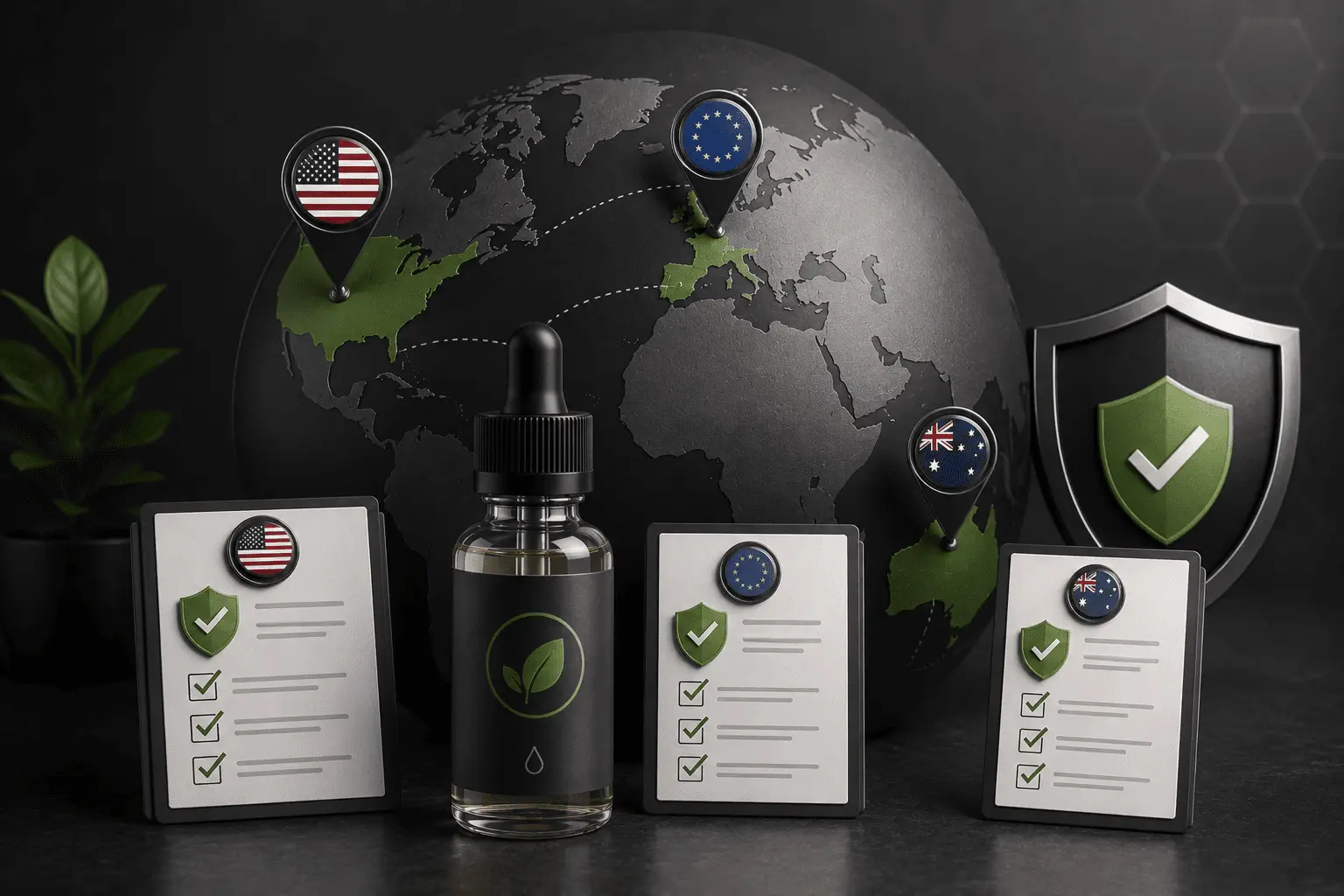
Compliance is not universal. A vape juice that may be acceptable in one market can be restricted, non-compliant, or illegal in another.
This is especially important for importers, retailers, and wholesale buyers. Do not rely on general words like “certified,” “approved,” or “premium quality.” Check the actual regulatory status for your target market.
European Union and UK
In the EU and UK, nicotine vaping products are commonly regulated under TPD / TRPR-style rules. Key requirements include limits on nicotine strength, bottle size, tank capacity, packaging, and health warnings.
For example, UK guidance lists common requirements such as:
- Maximum nicotine strength of 20mg/ml
- Maximum 10ml refill bottle for nicotine-containing e-liquid
- Maximum 2ml tank capacity
- Child-resistant and tamper-evident packaging
- Required warnings and labeling
For EU buyers, look for proper product notification, compliant labeling, nicotine limits, and packaging suitable for your destination country. Different countries may have their own notification systems and enforcement practices, so do not assume that one EU claim applies everywhere.
United States
In the United States, the key issue is not simply whether a company says it is “FDA registered.” The more important question is whether the product has FDA marketing authorization under the PMTA process.
The FDA states that authorized e-cigarette products are the only e-cigarettes that may currently be lawfully sold in the United States. As of the FDA’s updated list, there are 45 authorized e-cigarette products.
For US buyers, avoid relying on vague claims such as:
- “FDA approved”
- “FDA registered”
- “PMTA submitted”
- “Compliant for USA”
Instead, ask for clear documentation showing the product’s current regulatory status.
Australia
Australia treats nicotine vaping products very differently from many other markets. Nicotine vaping products are regulated under therapeutic vaping rules, and the TGA has strengthened product standards for therapeutic vapes from July 2025.
For Australian buyers, do not assume that a product suitable for the EU or US is suitable for Australia. Check whether the product fits current TGA requirements, product standards, supply channels, and import rules.
Quick Market Compliance Table
| Market | What to Check | Do Not Rely On |
|---|---|---|
| EU / UK | TPD/TRPR-style limits, notification, labeling, child-resistant packaging | Generic “EU compliant” claim |
| US | FDA marketing authorization / PMTA status | “FDA registered” alone |
| Australia | TGA therapeutic vaping rules and product standards | EU or US compliance claim |
Compliance does not make a vape juice risk-free. But it helps confirm that the product has passed at least some market-specific requirements.
Check Manufacturer Traceability
A brand name alone does not prove product quality.
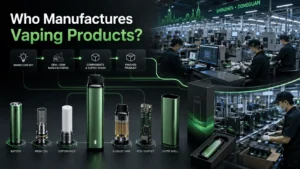
Many vape brands do not manufacture their own products. They may use OEM or ODM factories, and the same brand can source from different factories over time. This is why traceability matters more than the logo on the bottle.
A more trustworthy vape juice should provide:
- Manufacturer or responsible company name
- Batch or lot number
- Production date or expiry date
- QR code or verification code
- Lab report or COA when available
- Factory quality certifications where relevant
Why Batch Numbers Matter
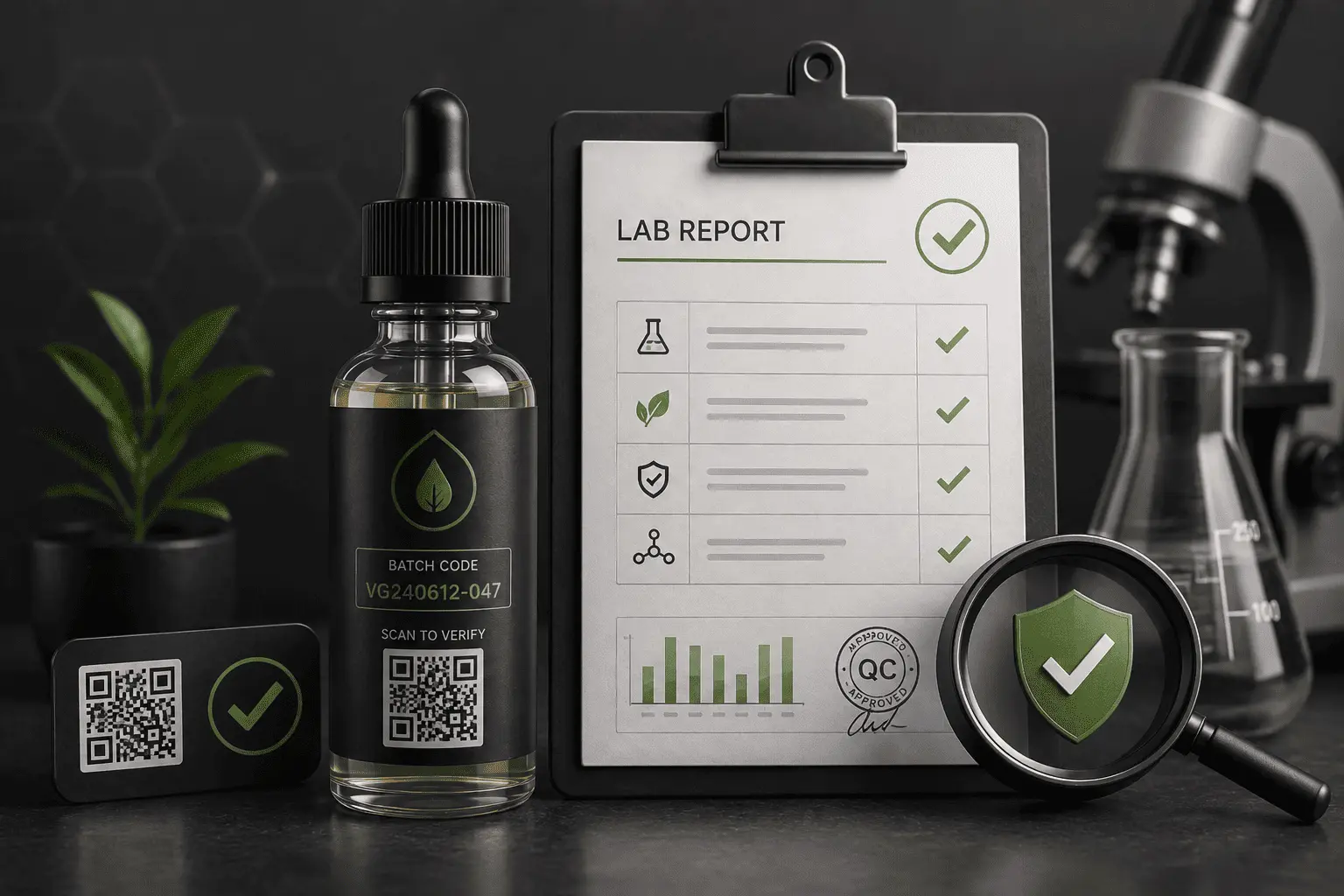
A batch number allows a product to be traced back to a specific production run. If there is a quality issue, batch tracking helps identify affected products.
If a bottle has no batch number, no production information, and no traceability, you have no easy way to know when or where it was made.
Why Lab Reports Matter
A lab report, often called a COA, can help confirm whether the product matches its label claims. For wholesale buyers, this is especially important before bulk purchasing.
A useful lab report may include:
- Nicotine concentration
- Heavy metal screening
- Contaminant testing
- Ingredient confirmation
- Batch number matching the product
The lab report should match the actual batch you are buying. A generic old report from a different product is not enough.
At Get Vape Puff, we treat documentation as part of the buying process. For wholesale customers, product screening is not only about flavor and price. It is also about whether the product can be traced, explained, and matched to the correct market.
Match the Vape Juice to Your Device
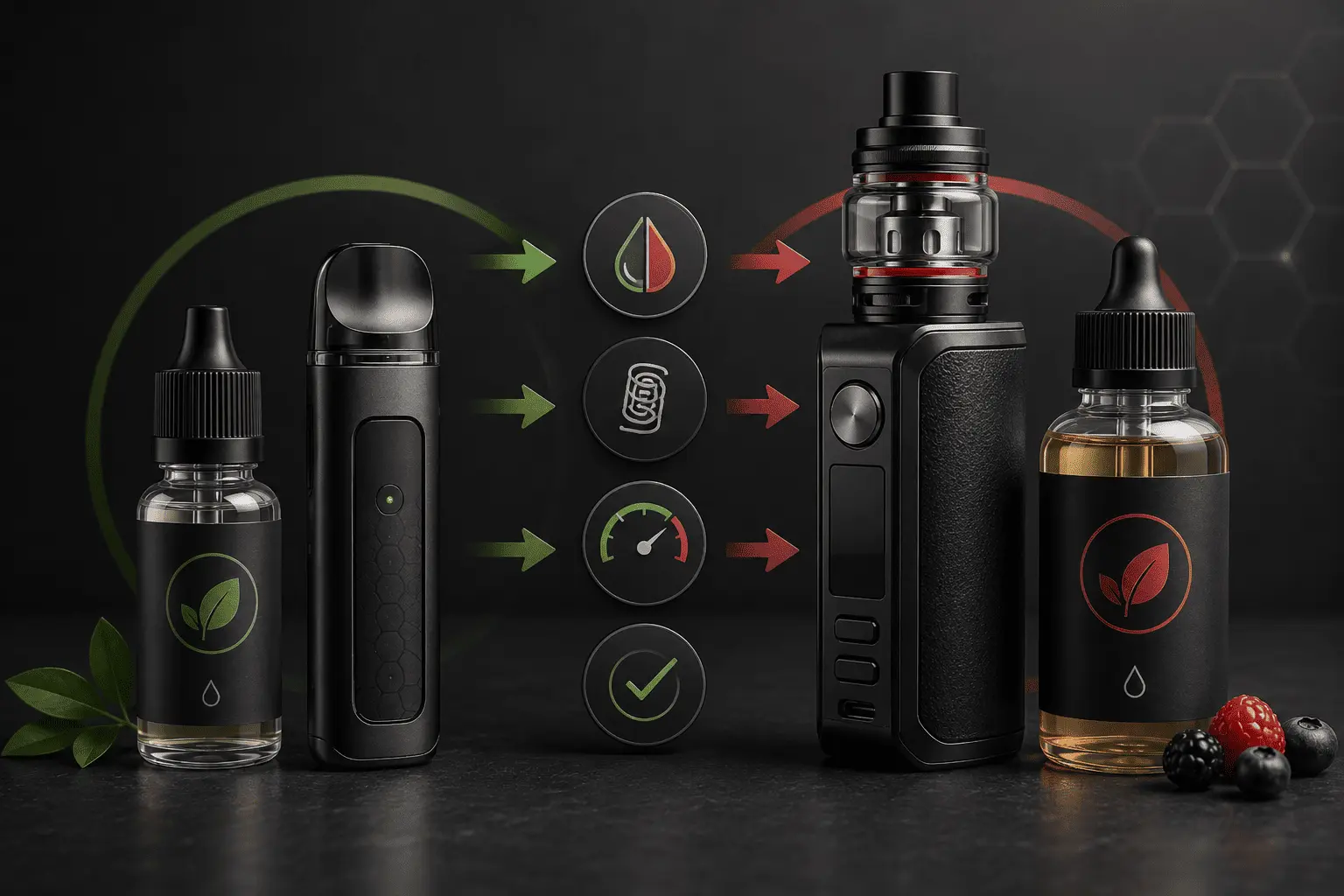
Even a well-made vape juice can become a bad choice if used with the wrong device.
Vape juice interacts with the coil, wattage, airflow, and wicking system. If the juice is too thick, too thin, or used at the wrong power level, it can cause dry hits, burnt taste, leakage, or overheating.
VG and PG Ratio
VG and PG affect vapor production, throat hit, and viscosity.
| VG/PG Type | Best For | Possible Problem |
|---|---|---|
| 50/50 VG/PG | Pod systems and low-power devices | May feel stronger on throat |
| Higher VG | Sub-ohm devices and larger vapor | Too thick for small pods |
| Higher PG | Stronger throat hit, thinner liquid | May leak in some devices |
If you use a small pod system, a 50/50 or higher-PG e-liquid is usually more suitable. If you use a sub-ohm device, higher-VG juice may work better.
Nicotine Salt vs Freebase Nicotine
Nicotine format also matters.
Nicotine salt is usually smoother at higher strengths and is often used in pod systems. Freebase nicotine usually gives a stronger throat hit and is common in lower-strength e-liquids for larger devices.
The wrong format can make the product unpleasant or too strong for your needs.
Wattage and Coil Compatibility
Always follow the device manufacturer’s recommended wattage range. Overheating e-liquid can increase unwanted byproducts and create a harsh or burnt experience.
Before buying, check:
- Recommended device type
- VG/PG ratio
- Nicotine type
- Coil resistance compatibility
- Wattage range
If the product page does not list this information, ask the seller before purchasing.
Do Not Trust Flavor and Puff Claims Alone
Flavor matters, but flavor should not be the only reason you choose a vape juice.
Many low-quality products focus heavily on flavor names, bright packaging, and exaggerated puff claims. These things do not tell you whether the product is well made.
Be careful with products that only promote:
- “Super strong flavor”
- “Ultra smooth”
- “Best seller”
- “Huge clouds”
- “Premium formula”
- “Imported quality”
These claims are marketing. They are not proof.
A better product page should also show:
- Ingredient information
- Nicotine strength
- VG/PG ratio
- Compliance details
- Batch or verification information
- Manufacturer or supplier transparency
If a product has beautiful packaging but no technical information, treat it carefully.
Two-Minute Vape Juice Safety Checklist
Before buying any vape juice, use this quick checklist.
| Step | Question | Good Sign | Red Flag |
|---|---|---|---|
| 1 | Can I see the ingredients? | VG, PG, nicotine, flavoring info shown | Missing or vague ingredients |
| 2 | Is the nicotine strength clear? | mg/ml or percentage clearly listed | No clear nicotine level |
| 3 | Is it suitable for my market? | Correct compliance information | Generic “certified” claim |
| 4 | Can I trace the product? | Batch number, QR code, manufacturer info | No batch or production details |
| 5 | Are lab reports available? | COA or testing available on request | Seller refuses documentation |
| 6 | Does it match my device? | VG/PG and device type listed | No compatibility information |
| 7 | Are harmful additives absent? | No diacetyl or vitamin E acetate | Ingredient list missing |
If one box is missing, ask the seller. If several boxes are missing, choose another product.
Questions to Ask Before Buying in Bulk
For wholesale buyers, the checklist should go further. Bulk buying increases your risk because one bad product can affect many customers.
Before placing a wholesale order, ask:
- Which factory manufactures this product?
- Can you provide batch-level documentation?
- Does the product meet the target market’s regulations?
- Can you provide a COA or lab report?
- What is the nicotine strength and format?
- What VG/PG ratio does the product use?
- Is the packaging child-resistant and properly labeled?
- Are there restrictions for my country or region?
- Can you verify authenticity with QR code or batch code?
- What support is available if there is a quality issue?
A reliable supplier should not be annoyed by these questions. These are normal questions for responsible sourcing.
At Get Vape Puff, we help buyers compare product options based on market suitability, documentation, flavor demand, and wholesale value. The best product is not always the cheapest or the one with the highest puff count. It is the one that fits your market and gives you the fewest unknowns.
Conclusion
Choosing safer vape juice is not about finding a magic brand name. It is about checking verifiable information before you buy.
Look for a clear ingredient list, correct market compliance, batch traceability, lab reports, and device compatibility. Avoid products with vague labels, unknown manufacturers, missing nicotine information, or unsupported “certified” claims.
No vape juice is completely risk-free. But a product with transparent ingredients, proper documentation, and traceable manufacturing is a more responsible choice than one that asks you to trust marketing alone.
If you are buying for resale or wholesale, check the product before you buy in bulk. A few minutes of verification can prevent compliance problems, customer complaints, and unnecessary risk.