
Most people start this journey by asking the wrong question. They ask "which brand is hot?" or "where is the cheapest price?" But the real question is whether your supply chain can support repeat sales.
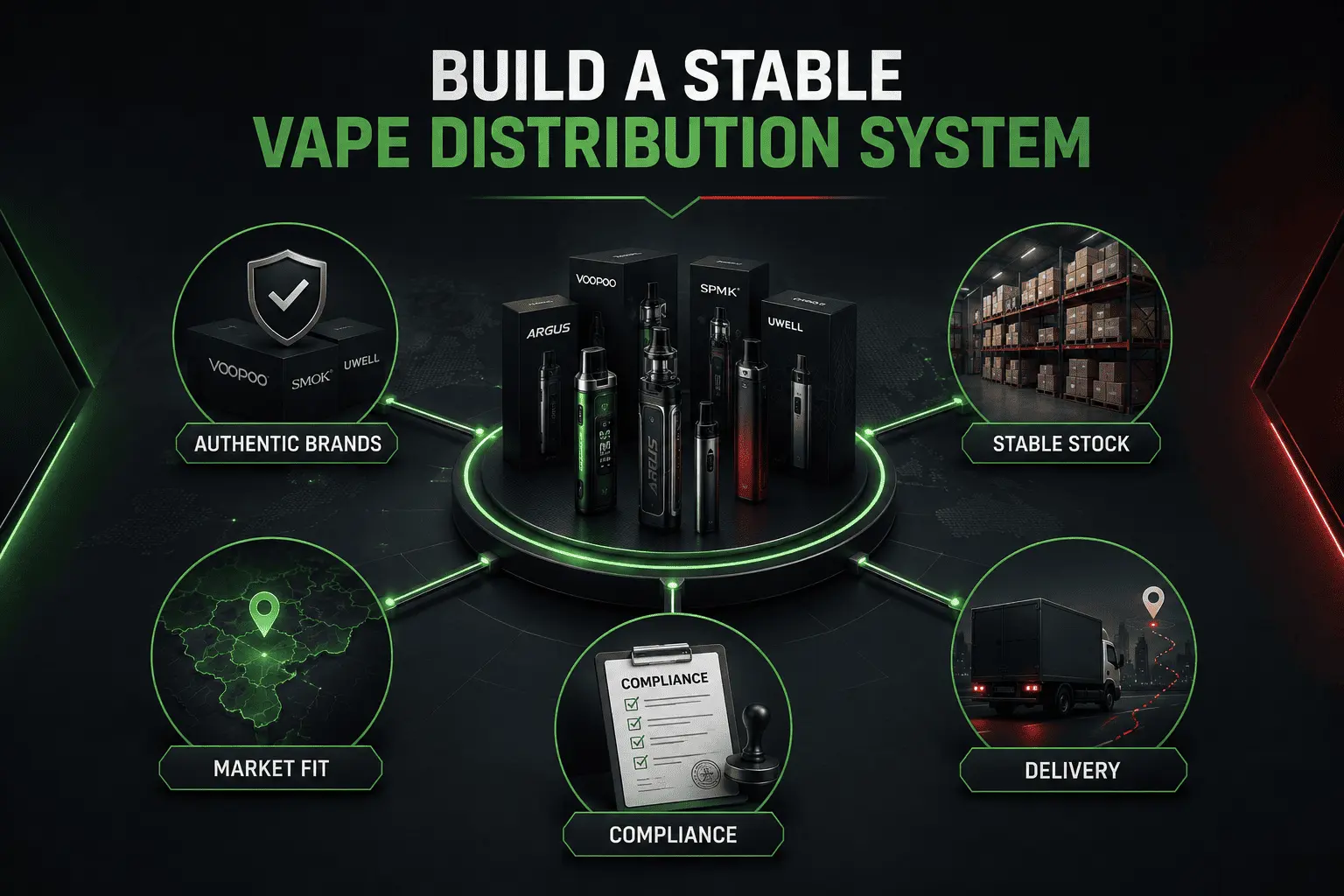
Becoming a vape distributor means building a reliable system around authentic brands, stable stock, market fit, compliance awareness, and controllable delivery. Working with a professional vape wholesale partner can help businesses access stable supply, competitive pricing, and suitable shipping solutions.
I get messages every week from small business owners in Europe, the US, and Australia. They sell consumer goods already. They see the vape market growing. They want in. But most of them focus on the wrong things at the start. After 13 years in this industry, I can tell you: the distributors who last are not the ones who found the cheapest deal. They are the ones who built something stable. Let me walk you through what actually matters.
What Is the First Question You Should Ask Before Becoming a Vape Distributor?
Most new distributors start with "which brand sells the most?" That sounds smart. But it skips the foundation. The first question should be about your system, not your product.
Before choosing any product, ask yourself: can my supplier, my target market, and my delivery route support consistent repeat orders? If any one of these breaks down, your business stalls — no matter how popular your brand is.
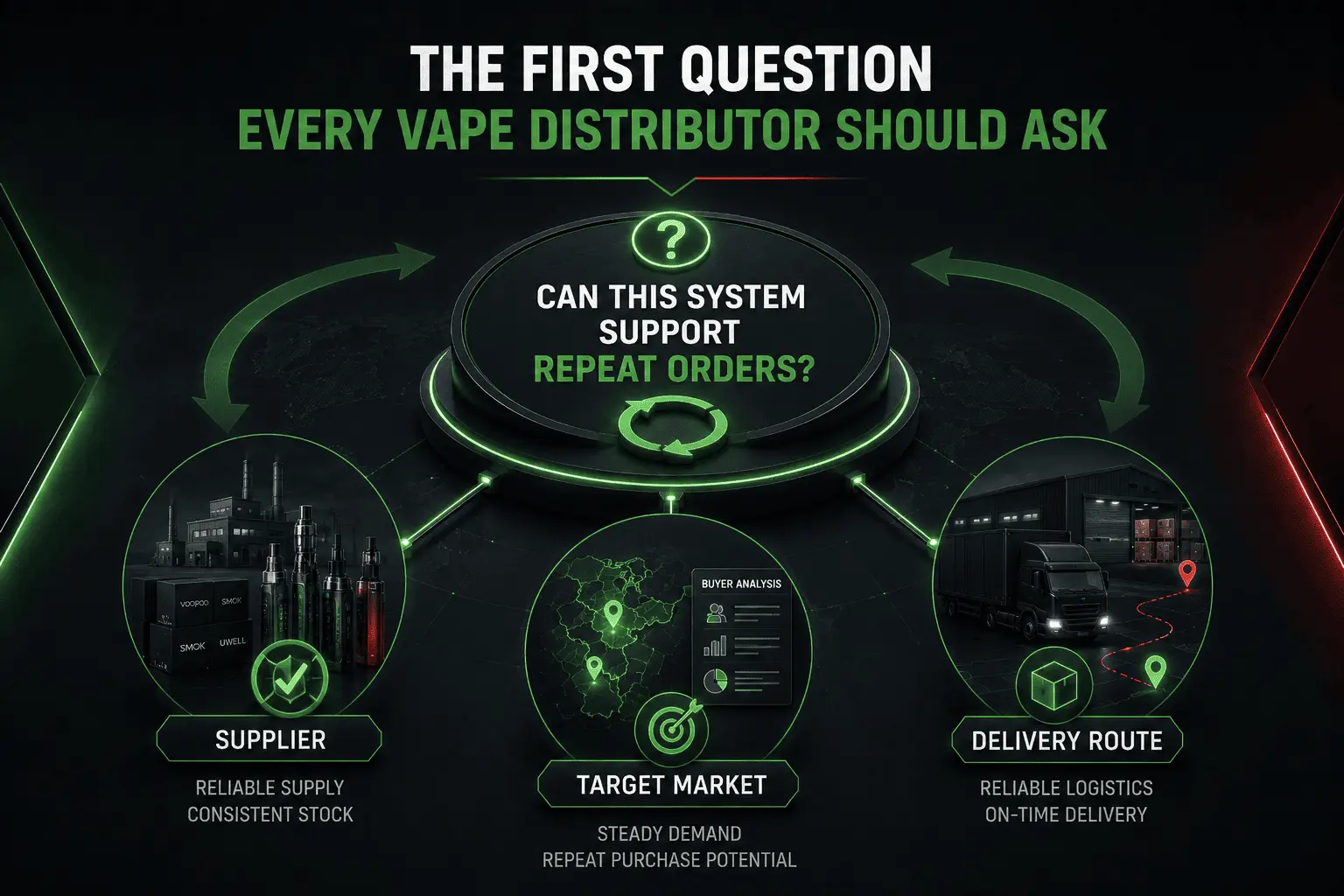
Why "system first" matters more than "product first"
Let me explain what I mean. I talk to buyers who found a popular brand, ordered a first batch, sold it fast, then tried to reorder. The supplier disappeared. Or the price jumped 40%. Or the next batch had different packaging and customers complained. The product was fine. The system was broken.
Here is how I think about the foundation:
| System Element | What to Check | What Goes Wrong Without It |
|---|---|---|
| Supplier reliability | Can they deliver the same product monthly? | Stock gaps, inconsistent quality |
| Market fit | Does this product match local demand and rules? | Unsold inventory, legal risk |
| Delivery route | Is the logistics path tested and repeatable? | Delayed orders, customs holds1 |
| Authenticity | Is the source verified and factory-backed? | Fake products, brand disputes |
| Reorder economics | Can you maintain margin on repeat orders? | One-time profit, no growth |
If you cannot answer "yes" to all five, you are not ready to pick a brand yet. You are ready to do more research. I have seen too many small wholesalers burn their first investment because they skipped this step. They treated distribution like a one-time trade deal. It is not. It is a recurring operation.
Why Are Popular Brands Not Automatically Safe Choices for Distributors?
Everyone wants to sell the brand that customers already know. That makes sense. But popularity does not equal safety for you as a distributor. A hot brand can still be a bad choice.
Popular vape brands carry hidden risks: counterfeit supply2, unstable stock from unofficial channels, price wars among too many sellers, and sudden regulatory attention. You must verify the source, not just the name.
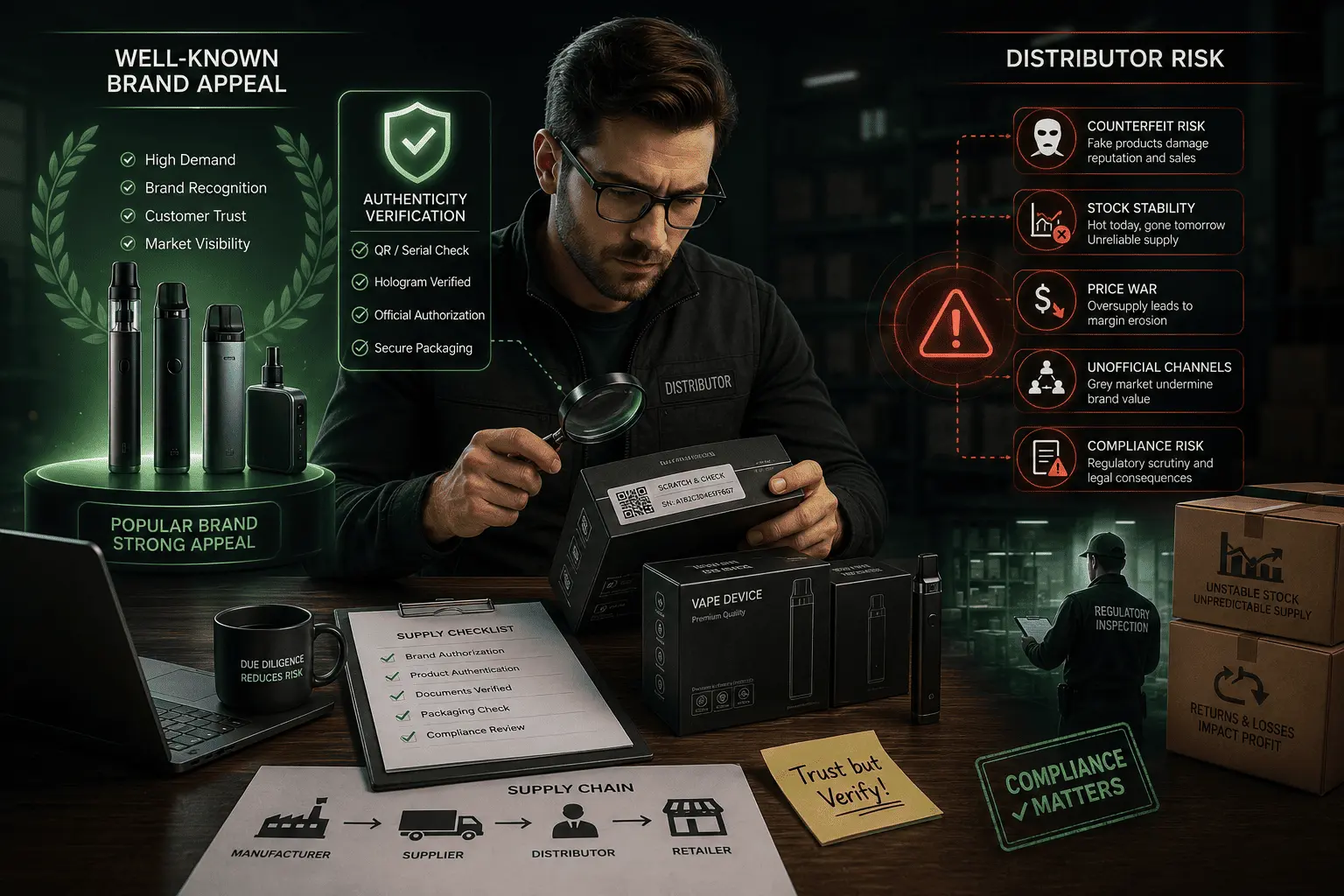
The risks behind well-known names
I will give you a real scenario. A buyer in Europe contacted me last year. He wanted to distribute a very well-known disposable vape brand. He found a supplier on a marketplace platform offering 30% below typical wholesale price. He ordered. The products arrived. They looked right. But the verification codes on the boxes failed. They were counterfeits.
He could not sell them legally. He could not return them. He lost his investment.
Here is what you need to check before committing to any brand:
| Risk Factor | How to Verify | Red Flag |
|---|---|---|
| Authenticity | Use brand verification codes, contact brand directly | Codes fail, supplier avoids the question |
| Supply continuity | Ask for order history, production schedule | "Limited stock" pressure, no reorder guarantee |
| Channel authorization | Request distributor credentials or factory relationship proof | Supplier cannot show documentation |
| Price positioning | Compare across 3-5 verified sources | Price far below market without explanation |
| Packaging consistency | Compare batch-to-batch quality | Different fonts, colors, or materials between orders |
What I tell buyers who ask me "which brand is most popular?"
I tell them: popularity is a market signal, not a sourcing strategy. You can sell a popular brand — but only if you can verify the source is authentic, the supply is stable, and your channel is not flooded with five other sellers undercutting each other. Sometimes a slightly less famous brand with a verified factory relationship and exclusive territory gives you better margins and fewer headaches.
Why Is Vape Distribution Risk Different in Every Market?
A product that sells well in the UK might not work in Germany. A device legal in Australia might be restricted in certain US states. Vape distribution is not one global game. It is many local games.
Vape distribution risk is market-specific. Products that sell in one country may face different local demand, sales restrictions, product rules, or logistics limitations elsewhere. You must research your specific market before buying inventory.
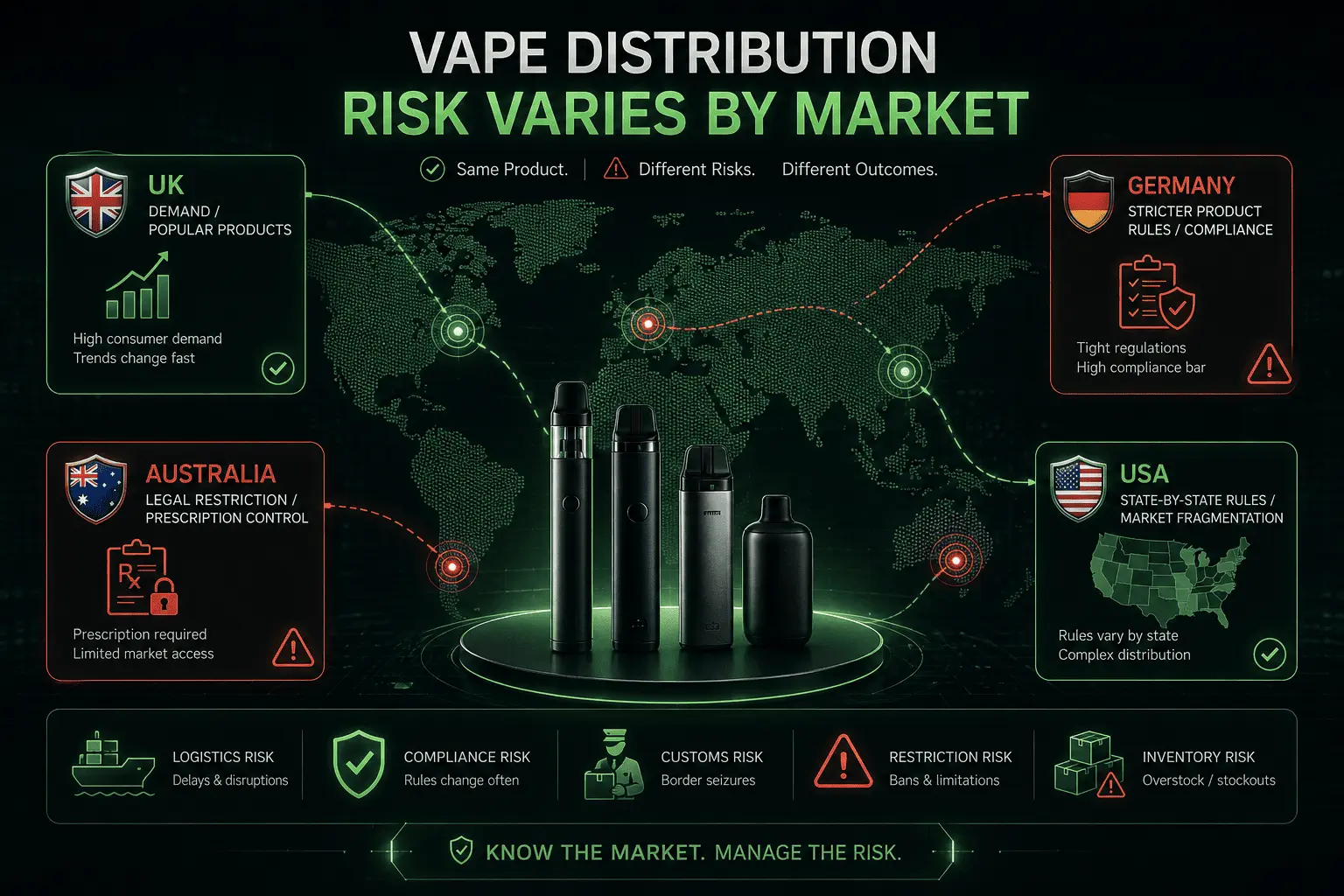
How markets differ in ways that affect your purchasing decisions
I work with buyers across three major regions: EU, North America, and Australia. Each has its own reality. Let me break it down.
| Factor | EU (example) | US (example) | Australia (example) |
|---|---|---|---|
| Product size limits | TPD limits tank to 2ml, liquid to 10ml | No universal federal limit, but FDA oversight | TGA regulations, prescription model changes |
| Flavor restrictions | Some countries restrict flavors3 | State-level flavor bans in some areas4 | Evolving rules on nicotine products |
| Import process | CE marking, TPD notification needed5 | FDA PMTA status matters6 | Customs scrutiny on nicotine goods |
| Consumer preference | Compact devices, tobacco/menthol popular | Larger puff counts, fruit flavors popular | Demand exists but access is complex |
| Channel type | Online + physical retail | Mostly physical retail + some online | Pharmacy and authorized channels7 |
What this means for your inventory decisions
If you buy 10,000 units of a 5,000-puff fruity disposable because it sells well in the US, and then try to sell it in the EU — you may find it does not comply with local rules. Now you have dead stock.
I always tell new distributors: pick your market first. Understand its rules and consumer habits. Then find products that fit. Do not buy products and then look for a market. That is backwards, and it is expensive.
Why Should Compliance Be Part of Your Supplier Screening, Not an Afterthought?
Many new distributors treat compliance as a final checkbox. They find a product, find a price, and then ask: "Is this legal to sell?" By then, they have already committed money. This is risky.
Compliance should be built into your supplier and product screening from the start. Verify local regulations, required documents, sales restrictions, and import rules before you commit inventory — not after your money is spent.
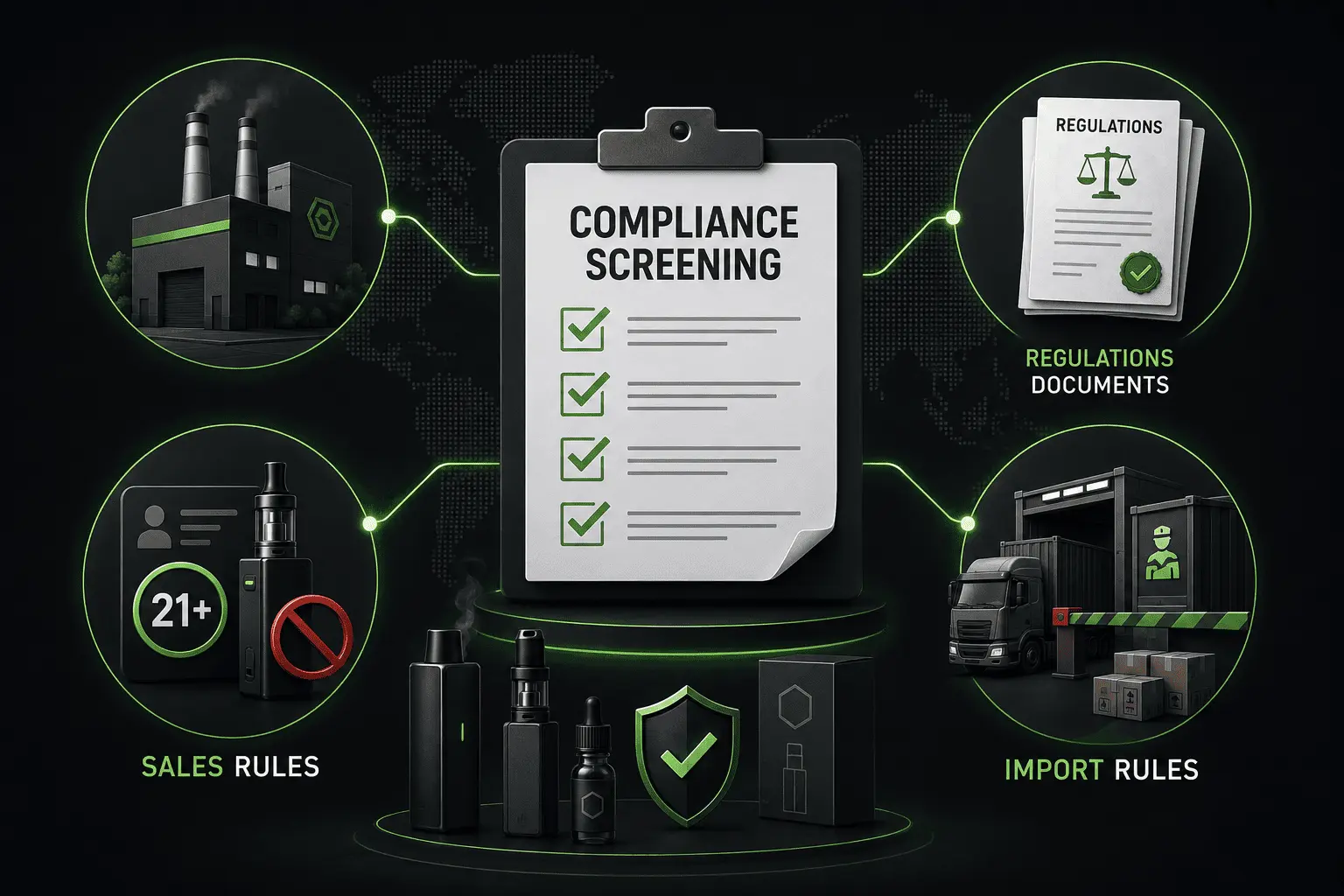
How to think about compliance without being a lawyer
I am not a lawyer. I am not a regulator. But after 13 years of shipping vape products globally, I know what causes shipments to get stuck, what makes buyers lose inventory, and what questions to ask before you order.
Here is my practical approach:
| Compliance Step | What You Do | Why It Matters |
|---|---|---|
| Identify your market's rules | Research government websites, trade associations | Avoid importing banned products |
| Ask your supplier for documentation | Request test reports, certifications, notifications | Legitimate suppliers have these ready |
| Check import requirements | Contact customs or a freight forwarder | Prevent shipments from being seized |
| Verify product specifications match rules | Compare device specs to local limits | Avoid non-compliant inventory |
| Keep records | Store all documents for each order | Protect yourself if questioned |
What good suppliers do differently
A reliable supplier does not wait for you to ask about compliance. They already know which products are suitable for which markets. They have test reports available. They can tell you which SKUs fit EU TPD rules and which are designed for markets with different limits.
When I evaluate a supplier — or when buyers evaluate us — this is one of the clearest signals of professionalism. If a supplier says "don't worry about it" when you ask about compliance documents, that is not confidence. That is a red flag.
How Can Mesii Support Vape Distributors?
If you are building a distribution business and looking for a brand that fits wholesale and distribution channels, Mesii is worth considering. Let me explain what makes it practical for distributors specifically.
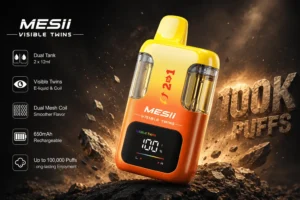
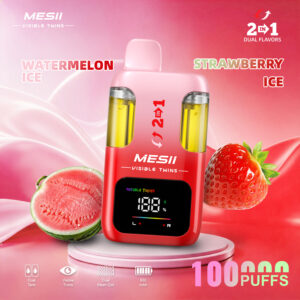
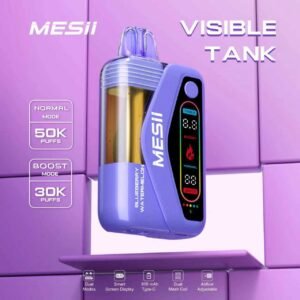
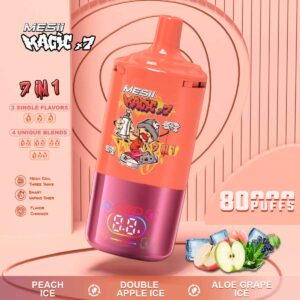
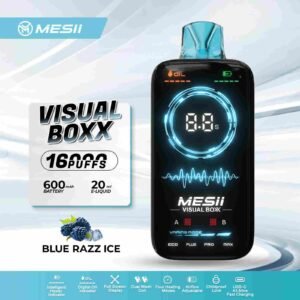
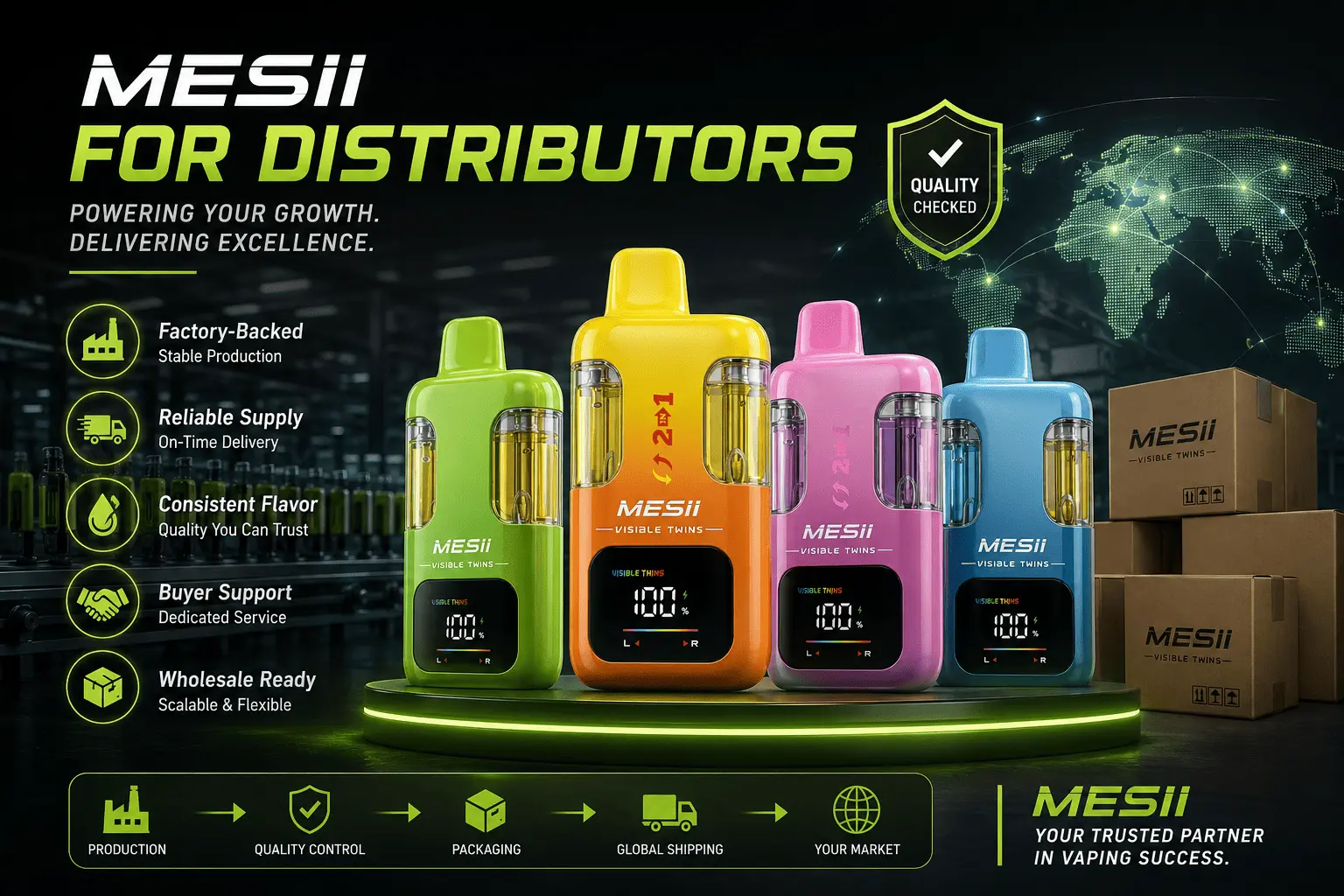
Mesii offers factory-backed disposable vape products designed for wholesale and distribution. The focus is on practical design, consistent flavor experience, reliable supply, and real buyer support — not just attractive packaging on a one-time order.
What Mesii brings to a distributor relationship
I have worked with many brands over the years. What matters for distributors is different from what matters for end consumers. Consumers care about flavor and look. Distributors care about all of that plus: can I reorder? Is the quality the same every time? Will my supplier answer when there is a problem?
Here is what Mesii offers from a distributor perspective:
| Distributor Need | How Mesii Addresses It |
|---|---|
| Product authenticity | Factory-backed production, verifiable source |
| Supply stability | Consistent manufacturing schedule, not limited drops |
| Design quality | Practical hardware design, not just visual appeal |
| Flavor consistency | Controlled e-liquid formulation across batches |
| Buyer support | Communication channel for order questions and product info |
| Wholesale pricing | Structured for bulk and distribution margins |
Why this matters for your business model
As a distributor, you are making a promise to your own customers. You are saying: "I will have this product available. It will be the same quality every time. I can deliver it when you need it." You can only keep that promise if your upstream source keeps their promise to you.
Mesii is built for this kind of relationship. It is not a hype brand that appears for one season and disappears. It is a factory-backed product line designed to support the people who sell it — not just the people who use it.
If you are evaluating brands for your distribution portfolio, I recommend looking at Mesii alongside your other options. Compare the supply reliability, the documentation availability, and the communication quality. Those are the things that protect your business long-term.
Conclusion
Becoming a vape distributor is about building a stable system — verified brands, compliant products, reliable logistics, and market-specific decisions — not just chasing the cheapest price or the hottest name.
"FDA and CBP Seize Nearly $34 Million Worth of Illegal E-Cigarettes ...", https://www.fda.gov/news-events/press-announcements/fda-and-cbp-seize-nearly-34-million-worth-illegal-e-cigarettes-during-joint-operation. Customs and border protection agencies in multiple jurisdictions, including the US Customs and Border Protection and EU member state customs authorities, have documented seizures of non-compliant, counterfeit, or improperly declared vaping products at points of entry, representing a tangible logistics risk for international vape distributors. Evidence role: case_reference; source type: government. Supports: Vaping and e-cigarette products are subject to customs scrutiny and seizure during international shipment, particularly where import restrictions or product compliance requirements apply. Scope note: Published seizure data reflects detected non-compliance rather than the full scope of customs risk; the frequency of holds on compliant shipments is not systematically documented in public sources. ↩
"Adolescents' Perceptions, Experiences, and Reactions to “Fake ...", https://pmc.ncbi.nlm.nih.gov/articles/PMC11812520/. Regulatory agencies and customs authorities in multiple jurisdictions have reported significant volumes of counterfeit and illicit vaping products entering distribution channels, with enforcement actions documenting the use of fraudulent brand markings and authentication codes on non-genuine goods. Evidence role: general_support; source type: institution. Supports: Counterfeit vaping products represent a documented and widespread problem in the global vape supply chain. Scope note: Comprehensive global statistics on counterfeit vape product prevalence are limited; available data largely reflects enforcement actions rather than total market volume. ↩
"Emerging Electronic Cigarette Policies in European Member States ...", https://pmc.ncbi.nlm.nih.gov/articles/PMC8025686/. Countries including the Netherlands and Finland have enacted national measures restricting the sale of flavored e-cigarette products, reflecting the ability of EU member states to adopt stricter national rules beyond the baseline harmonization established by Directive 2014/40/EU. Evidence role: historical_context; source type: government. Supports: Several EU member states have implemented national restrictions on flavored e-cigarette products beyond the minimum requirements of the Tobacco Products Directive. Scope note: The regulatory landscape for flavor restrictions across EU member states is evolving; distributors should verify current national legislation in each target market. ↩
"E-Cigarettes Authorized by the FDA", https://www.fda.gov/tobacco-products/market-and-distribute-tobacco-product/e-cigarettes-vapes-and-other-electronic-nicotine-delivery-systems-ends-authorized-fda. Several US states, including Massachusetts and California, have enacted legislation restricting or prohibiting the sale of flavored tobacco and e-cigarette products, creating a patchwork of state-level regulations that distributors must navigate alongside federal FDA oversight. Evidence role: historical_context; source type: government. Supports: Multiple US states have enacted restrictions or outright bans on flavored e-cigarette and vaping products. Scope note: The list of states with flavor restrictions changes as new legislation is enacted or challenged; distributors should consult current state statutes and the Campaign for Tobacco-Free Kids or CDC state policy databases for up-to-date information. ↩
"Emerging Electronic Cigarette Policies in European Member States ...", https://pmc.ncbi.nlm.nih.gov/articles/PMC8025686/. Under EU Directive 2014/40/EU, manufacturers and importers of e-cigarettes must submit product notifications to national competent authorities in each member state where the product is to be sold; CE marking requirements may additionally apply under the General Product Safety Directive or other applicable EU product legislation. Evidence role: definition; source type: government. Supports: E-cigarette products sold in the EU must comply with TPD notification requirements and, where applicable, CE marking under relevant product safety directives. Scope note: CE marking applicability to vaping products depends on product classification and applicable directives; legal advice specific to the product category is recommended. ↩
"Premarket Tobacco Product Applications - FDA", https://www.fda.gov/tobacco-products/market-and-distribute-tobacco-product/premarket-tobacco-product-applications. The U.S. Food and Drug Administration requires manufacturers of e-cigarettes and vaping products to submit a Premarket Tobacco Product Application (PMTA) demonstrating that marketing the product is appropriate for the protection of public health, making PMTA authorization status a key compliance consideration for US distributors. Evidence role: mechanism; source type: government. Supports: The FDA's PMTA process determines whether e-cigarette and vape products may be legally marketed in the United States. Scope note: Regulatory enforcement priorities and timelines have evolved; distributors should consult current FDA guidance for the most up-to-date requirements. ↩
"Pharmacist-only supply of nicotine vaping products - PubMed", https://pubmed.ncbi.nlm.nih.gov/38599788/. Under Australia's prescription-based regulatory model for nicotine vaping products, pharmacies have served as a primary authorized dispensing channel, distinguishing the Australian distribution landscape from the general retail models prevalent in the EU and US. Evidence role: mechanism; source type: government. Supports: Australia's regulatory framework has directed nicotine vaping product sales through pharmacy and other authorized channels rather than general retail. Scope note: Australia's vaping retail regulations have been subject to ongoing reform; the current authorized channel structure should be verified against the latest TGA and state health authority guidance. ↩