
When people buy a vape, they usually notice the brand name first. They see the logo, the flavor, the puff count, the packaging, and the device design. But behind every vaping product, there is a much bigger manufacturing system.
So who actually manufactures vaping products?
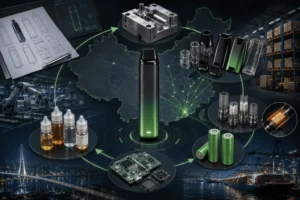
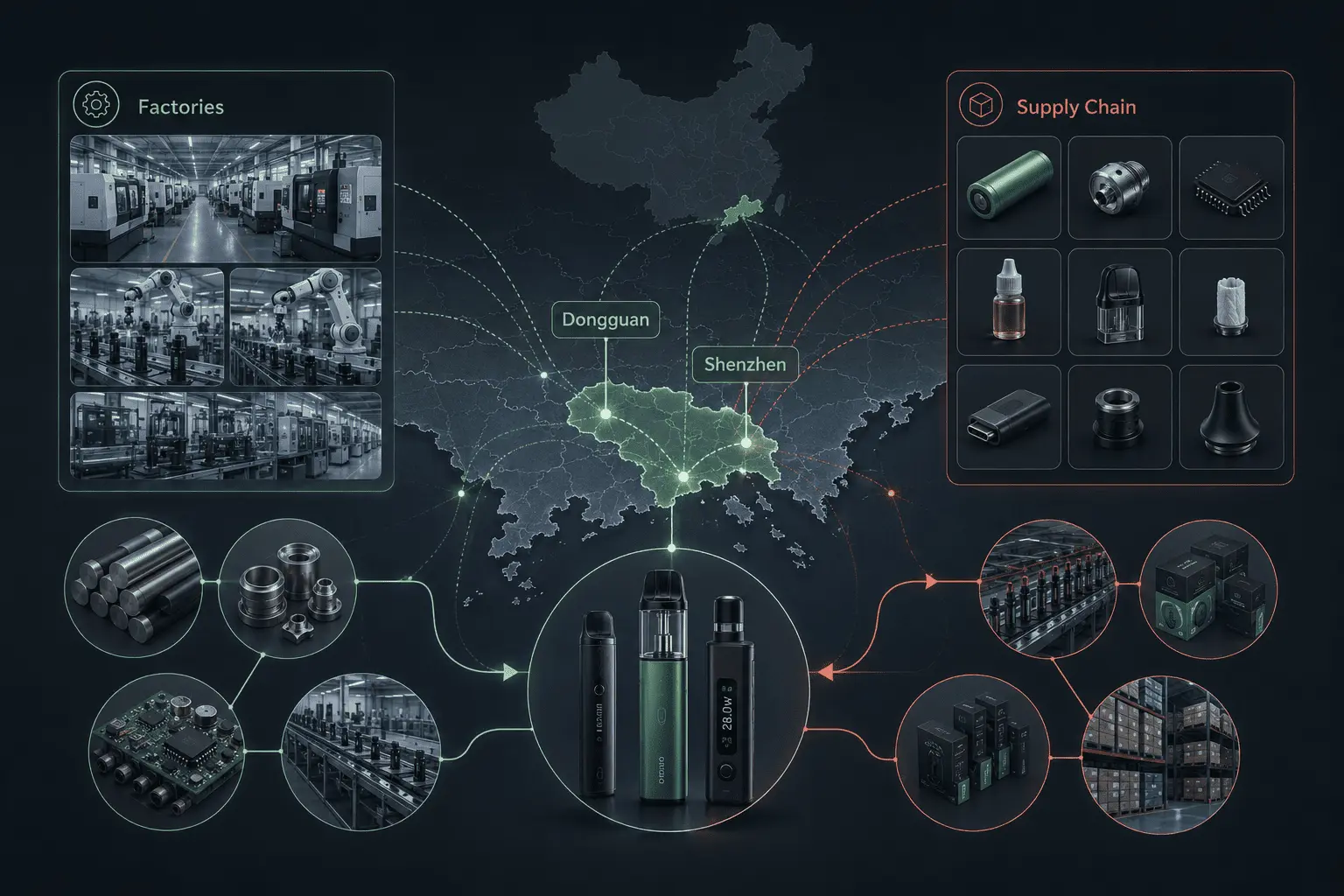
Vaping products are manufactured by specialized vape factories, OEM/ODM manufacturers, component suppliers, e-liquid producers, packaging suppliers, and brand-led product teams. Most vape hardware is produced in China, especially in Shenzhen and Dongguan, where the global vape supply chain is highly developed.
A vape brand is not always the same as a vape manufacturer. Some brands own factories. Some work closely with factories. Others use OEM or ODM production to bring products to market faster.
Understanding this supply chain helps buyers know where vapes come from, how they are made, and what to check before choosing a supplier.
Who Actually Makes Vapes?
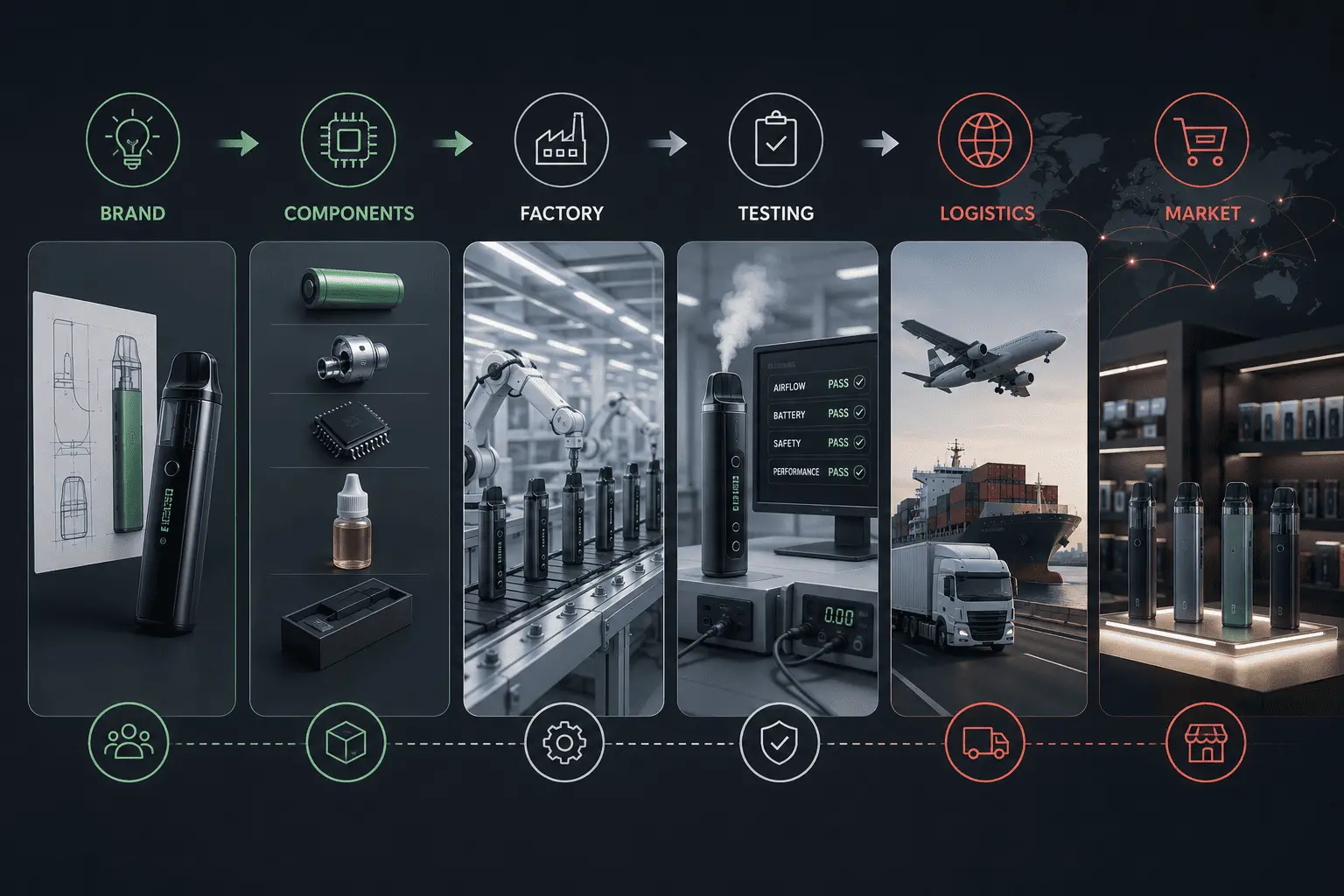
A vaping product is not made by one single company from start to finish. It usually involves several different parties.
The brand is responsible for the product concept, market positioning, packaging style, flavor selection, and sales channels. The factory handles product engineering, mold development, battery assembly, coil installation, e-liquid filling, device testing, and final packaging.
Other suppliers also play important roles. Battery suppliers provide power cells. Coil suppliers help determine vapor and flavor quality. E-liquid suppliers create the flavor formula. Packaging suppliers produce boxes, labels, and warning information. Logistics companies then handle export and delivery.
In simple terms, the brand creates the market identity. The factory creates the physical product.
This is why two vape products may look similar on the outside but perform very differently. The difference often comes from the manufacturer’s design standard, coil quality, battery control, e-liquid filling process, and quality inspection.
Why Are So Many Vapes Made in China?
China is the center of global vape manufacturing. Shenzhen and Dongguan are especially important because they have a mature electronics and vape supply chain. Industry logistics sources commonly describe China as the main production hub for vape products, with Shenzhen as a core manufacturing center.
This did not happen by accident.
A disposable vape needs many parts: battery, PCBA, chipset, coil, cotton, tank, shell, mouthpiece, e-liquid, packaging, and testing equipment.1 In Shenzhen and Dongguan, many of these suppliers are located close to each other. This makes product development faster and production more efficient.
For vape brands and vape wholesalers, this matters a lot. A mature supply chain means faster sampling, more product options, better cost control, and easier customization.
For example, if a brand wants to develop a new disposable vape with a screen, adjustable airflow, dual mesh coils, rechargeable battery, or multiple flavors in one device, a strong manufacturing area can support that development more quickly.
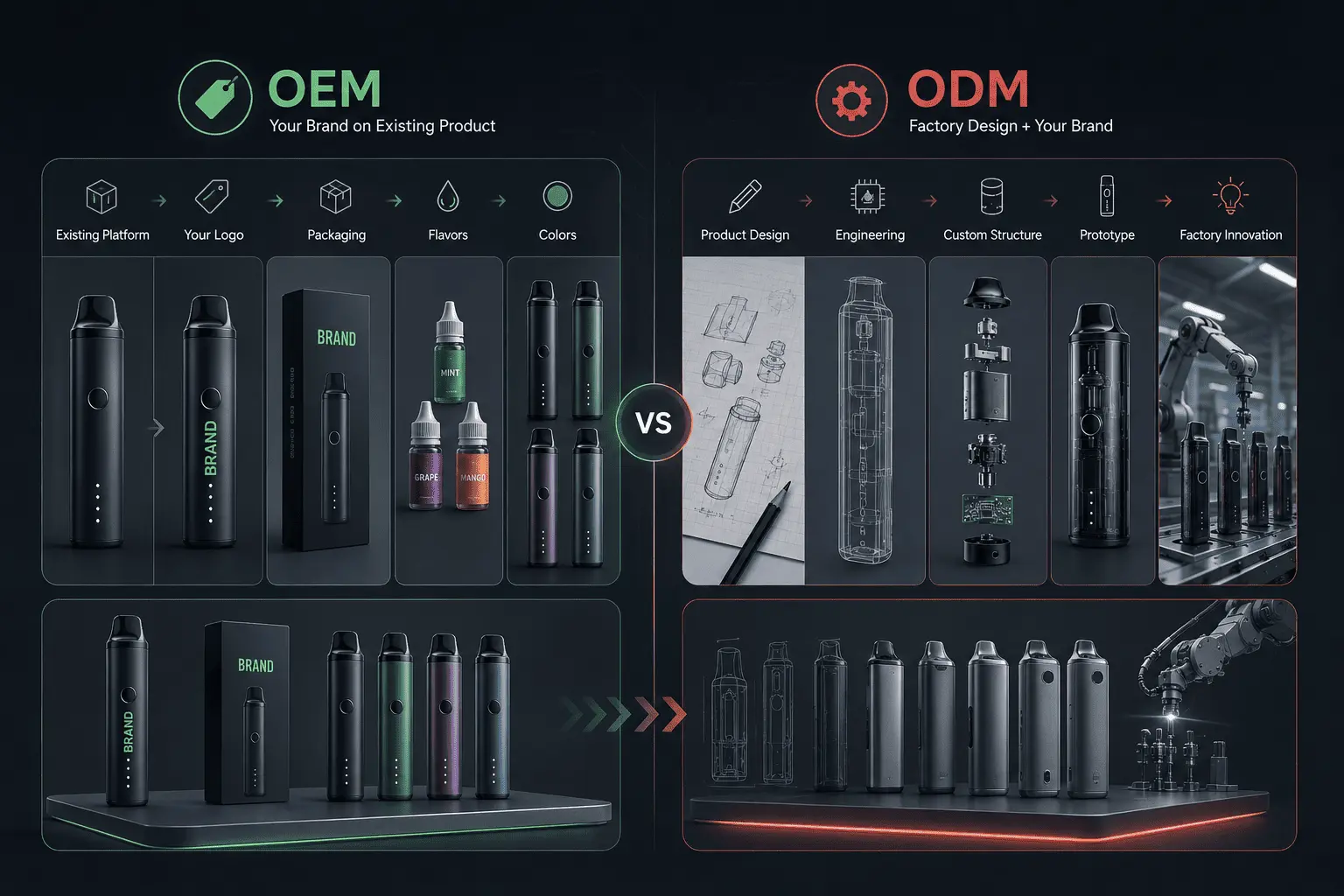
What Is an OEM Vape Manufacturer?
OEM means Original Equipment Manufacturer.
In the vape industry, an OEM manufacturer produces vaping products according to the buyer’s requirements. The buyer may already have a brand name, logo, packaging design, target market, and product idea. The factory then produces the product under that brand.
OEM is common for private label vape projects.
For example, a wholesaler may choose an existing disposable vape model and customize the logo, color, packaging, nicotine strength, and flavors. The factory already has the production line and technical structure. The buyer can launch a branded product without building a factory.
OEM production is useful when a business wants to enter the vape market quickly. It saves time, reduces development cost, and gives the buyer access to mature factory technology.
However, OEM quality depends heavily on the factory. A low-cost factory may offer cheaper prices, but it may also have weaker testing, less stable coils, poor leak control, or inconsistent flavor performance.
What Is an ODM Vape Manufacturer?
ODM means Original Design Manufacturer.2
An ODM factory does more than produce the product. It also helps design the product. This can include the device structure, airflow system, coil solution, battery capacity, oil tank layout, screen display, charging design, and overall user experience.
ODM is useful for brands that want something more unique but do not have a full in-house engineering team.
For example, a brand may ask for a high-puff disposable vape, a dual-flavor vape, a transparent tank design, or a multi-flavor device. The ODM factory can help turn that idea into a workable product.
In many cases, ODM manufacturers already have ready-made product platforms. Brands can adjust the appearance, flavors, packaging, and market positioning based on those platforms.
For modern vape brands, ODM is especially important because the market changes quickly. Buyers want better flavor, longer battery life, fewer leaks, smoother airflow, and more interesting product designs. A strong ODM partner helps brands react faster.
What Parts Go Into a Vape?
A vape may look simple, but the inside structure is more complex than many people think. Every part affects performance.
| Part | What It Does | Why It Matters |
|---|---|---|
| Battery | Powers the device | Affects safety, charging, and lifespan |
| Coil | Heats the e-liquid | Affects flavor, vapor, and smoothness |
| Cotton / Wick | Transfers e-liquid to the coil | Affects dry hits and flavor consistency |
| E-liquid | Creates flavor and nicotine delivery | Affects taste, throat hit, and compliance |
| PCBA / Chipset | Controls power and protection | Affects stability and safety |
| Tank / Pod | Holds the e-liquid | Affects capacity and leak resistance |
| Airflow System | Controls the draw | Affects smoothness and vapor density |
| Mouthpiece | User contact point | Affects comfort and hygiene |
| Shell / Housing | Protects the device | Affects durability and appearance |
| Packaging | Presents and protects the product | Affects branding, compliance, and retail display |
A good manufacturer does not only assemble these parts. It controls how they work together.
For example, a powerful battery is not useful if the coil burns too hot. A large oil tank is not enough if the device leaks. A beautiful shell does not matter if the flavor drops after a few hundred puffs.
Good vape manufacturing is about balance.
How Are Disposable Vapes Manufactured?
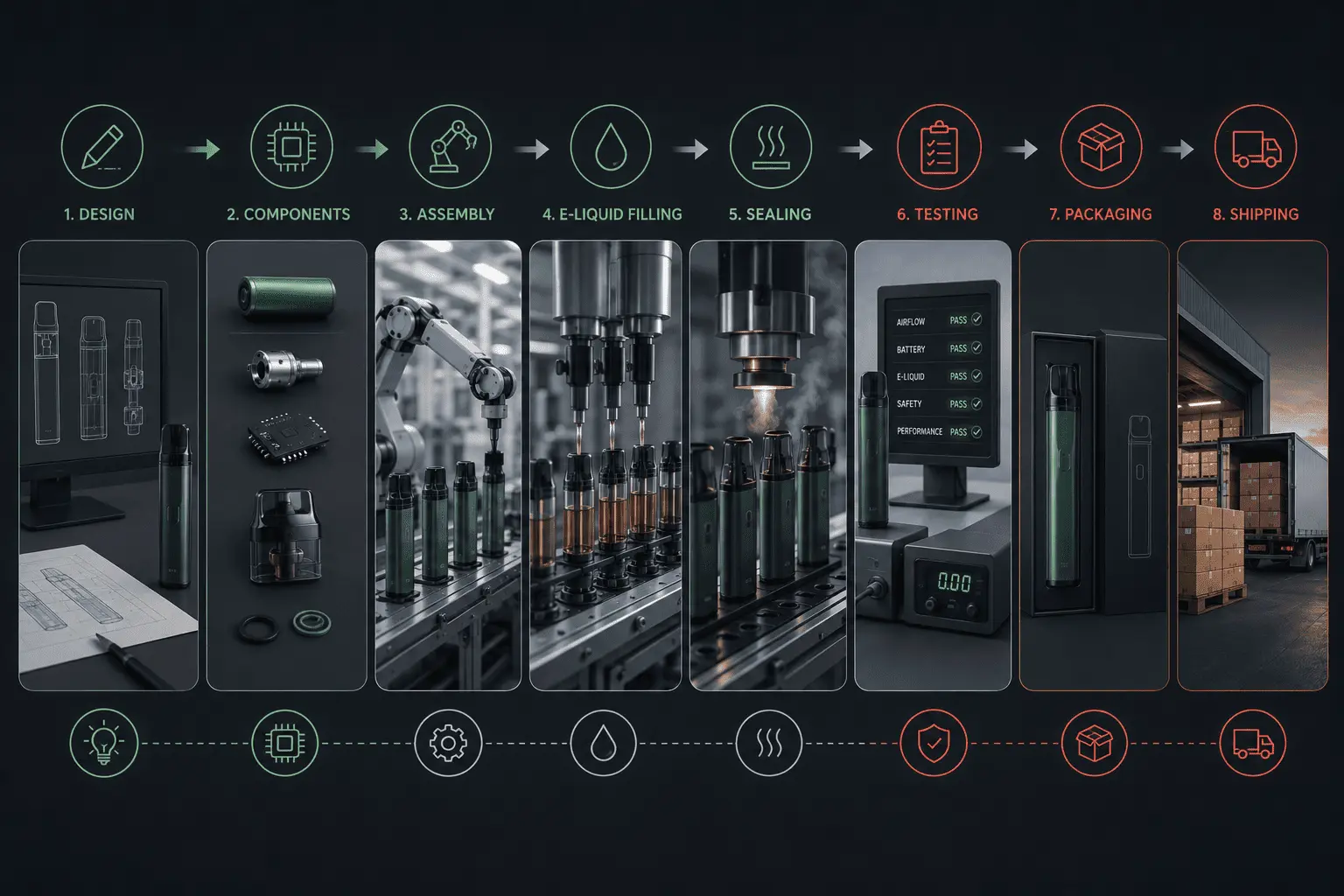
Disposable vape production usually follows a clear process.
First, the product concept is confirmed. This includes puff count, size, battery capacity, e-liquid capacity, coil type, airflow design, flavors, nicotine strength, and target market.
Next, the factory develops or selects the device structure. If it is a new model, the factory may need mold design, internal layout design, and testing samples.
After that, key components are prepared. These include batteries, PCBA boards, coils, tanks, shells, mouthpieces, and packaging materials.
Then the assembly process begins. The coil and cotton are installed. The tank or oil chamber is prepared. E-liquid is filled into the device. The product is sealed to reduce leakage risk.
After assembly, the device goes through testing. Factories usually check functions such as airflow, battery connection, charging, leakage, vapor output, and appearance.3
Finally, the product is packed, labeled, boxed, and prepared for shipping.
Do Vape Brands Own Their Own Factories?
Some do, but many do not.
Large vape companies may own factories or have deep control over production. Some brands have their own R&D teams and production lines. Others work with long-term OEM or ODM partners.
This is common in many consumer electronics industries. A brand does not always manufacture every product by itself. Phones, headphones, chargers, smart devices, and vape products often use specialized manufacturing partners.4
The important question is not only whether the brand owns the factory.
The more important questions are:
Does the brand control product quality?
Does the brand test the product properly?
Does the brand work with reliable suppliers?
Does the product meet the rules of the target market?
Does the brand take responsibility when problems happen?
A brand that does not own a factory can still offer excellent products if it has strong quality control and a reliable manufacturing partner. On the other hand, a factory-owned brand can still produce poor products if it only focuses on low price.
Are All Vape Manufacturers the Same?
No. Vape manufacturers can be very different.
Some factories focus on low-cost production. Their goal is to make the cheapest product possible. This may be attractive at first, but it can create problems later. Poor coil quality, unstable batteries, weak flavor performance, leaking devices, and bad packaging can all damage the buyer’s business.
Other manufacturers focus more on product design, user experience, testing, and long-term reliability. These factories may cost more, but they usually provide better value for wholesalers and distributors.
For vape buyers, the cheapest supplier is not always the best supplier.
A low price can become expensive if the product causes complaints, returns, damaged reputation, or customs problems.
This is why serious buyers should look beyond the unit price. They should also check the factory’s experience, product testing, compliance support, production capacity, and after-sales responsibility.
What Should Buyers Check Before Choosing a Vape Manufacturer?
Choosing the right vape manufacturer is very important, especially for wholesalers, distributors, and private label buyers.
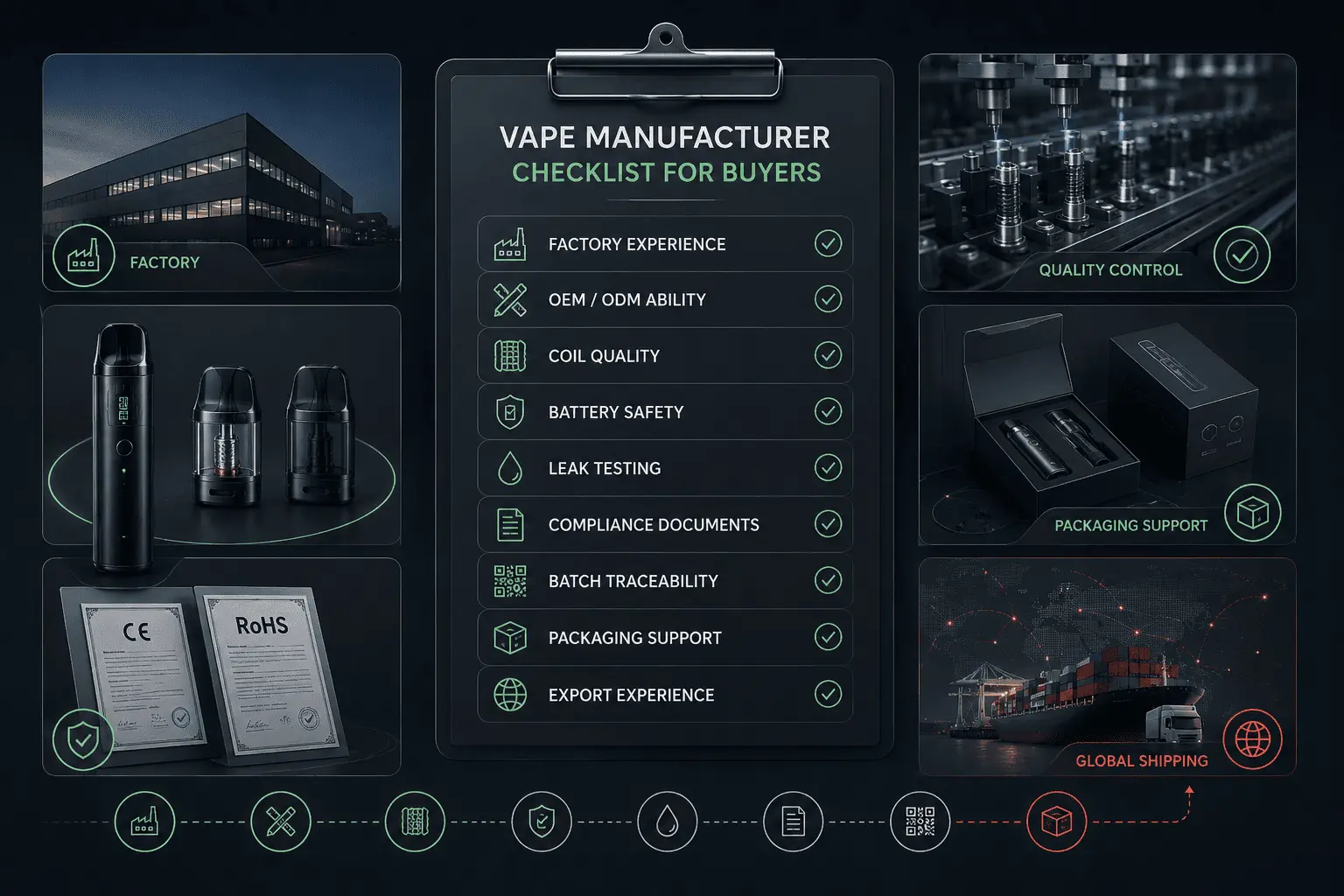
Here is a simple checklist.
| Checkpoint | Why It Matters |
|---|---|
| Factory experience | Reduces production and quality risks |
| OEM/ODM ability | Supports custom branding and new product development |
| Coil quality | Determines flavor, vapor, and device lifespan |
| Battery safety | Affects reliability and user safety |
| Leak testing | Reduces returns and customer complaints |
| E-liquid quality | Affects taste, smoothness, and consistency |
| Batch traceability | Helps with quality control and problem tracking |
| Packaging support | Important for retail display and legal warnings |
| Compliance documents | Needed for import and resale in many markets |
| Export experience | Reduces shipping, customs, and documentation problems |
Buyers should also check market regulations before importing or reselling vape products.
In the European Union, electronic cigarettes are regulated under the Tobacco Products Directive. The European Commission states that the Directive sets limits for nicotine concentration and volume, and also includes requirements for child-resistant design, tamper evidence, refill safety, ingredient purity, and consistent nicotine delivery.5
In the United States, e-cigarettes, vapes, and other electronic nicotine delivery systems are regulated by the FDA. The FDA states that ENDS products are tobacco products and are subject to its regulatory requirements.6
Because rules vary by country and region, buyers should always confirm local requirements before purchasing large quantities.
Why Manufacturing Quality Matters So Much
Vape products are repeat-purchase products. A customer may try one device once, but they will only buy again if the experience is good.
This means manufacturing quality directly affects sales.
If the flavor is strong and consistent, customers remember it. If the device leaks, burns, tastes weak, or stops working early, customers also remember it.
For wholesalers, this is even more important. One bad batch can affect many stores and many customers. That is why stable manufacturing is more valuable than a small price difference.
Good vape manufacturing should focus on:
Consistent flavor performance
Stable vapor output
Reliable battery safety
Strong leak resistance
Comfortable airflow
Clean packaging
Clear batch information
Market compliance support
A well-made vape is not only a product. It is part of the buyer’s reputation.
How Mesii Fits Into the Vape Supply Chain
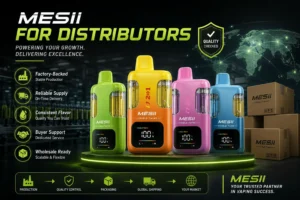
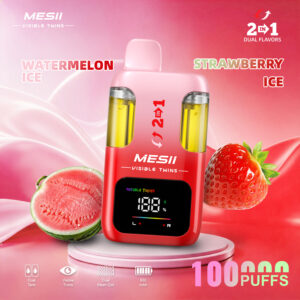
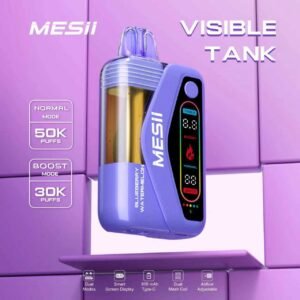
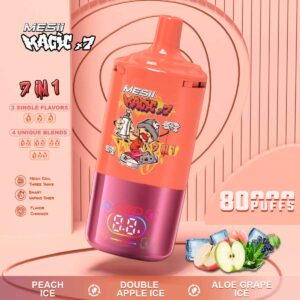
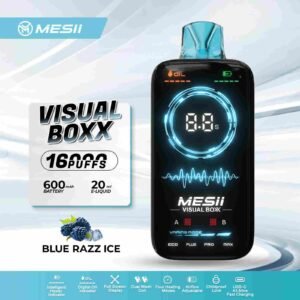
Mesii is a vape brand that works within China’s mature vape manufacturing ecosystem. Instead of only focusing on low-cost products, Mesii pays attention to product experience, flavor consistency, practical design, and wholesale-ready supply.
For buyers, this matters because the vape market is already very competitive. A product needs more than attractive packaging. It needs stable performance, good flavor, clear positioning, and reliable supply.
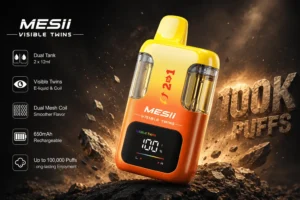
Mesii products are designed for buyers who want practical disposable vape options with strong market appeal. Whether the goal is wholesale supply, retail sales, or brand expansion, choosing the right product and manufacturing partner can make a major difference.
Final Answer: Who Manufactures Vaping Products?
Vaping products are manufactured by specialized vape factories, OEM/ODM manufacturers, component suppliers, e-liquid producers, packaging suppliers, and brand-led product teams.
Most vape hardware is produced in China, especially around Shenzhen and Dongguan, because these areas have a strong electronics and vape supply chain.
Some vape brands own factories. Some work with OEM factories. Others use ODM manufacturers to design and produce new products. The best choice depends on the buyer’s goals, budget, market, and quality requirements.
For wholesalers and distributors, the most important thing is not just finding a low price. It is finding a reliable product, a stable supplier, and a manufacturer that understands quality, compliance, and long-term market demand.
If you are looking for wholesale disposable vape products or factory-backed vape supply solutions, Mesii can help you explore reliable product options for your market.
"About E-Cigarettes (Vapes) | Smoking and Tobacco Use - CDC", https://www.cdc.gov/tobacco/e-cigarettes/about.html. Government descriptions of electronic nicotine delivery systems identify core components such as a battery, heating element, liquid reservoir or cartridge, mouthpiece, and nicotine-containing liquid, supporting the article’s component overview. Evidence role: definition; source type: government. Supports: E-cigarette or ENDS devices generally include a power source, heating element, liquid reservoir or cartridge, mouthpiece, and e-liquid.. Scope note: The source may not list every manufacturing item named in the article, such as PCBA, packaging, or testing equipment. ↩
"Original design manufacturer - Wikipedia", https://en.wikipedia.org/wiki/Original_design_manufacturer. The reference defines ODM as “original design manufacturer,” supporting the article’s distinction between production-only and design-inclusive manufacturing roles. Evidence role: definition; source type: encyclopedia. Supports: ODM is the abbreviation for Original Design Manufacturer and describes a manufacturer that designs and produces products that may be sold under another company’s brand.. ↩
"[PDF] Enforcement Priorities for Electronic Nicotine Delivery ... - FDA", https://www.fda.gov/media/133880/download. Regulatory guidance for electronic nicotine delivery systems identifies device design, electrical characteristics, liquid containment, and aerosol output as relevant product-performance considerations, providing contextual support for the listed factory checks. Evidence role: general_support; source type: government. Supports: Regulatory or technical guidance for ENDS products considers device design, electrical function, leakage, aerosol generation, and product performance as relevant testing or review areas.. Scope note: Such guidance may describe regulatory review expectations rather than proving that all factories routinely perform each listed test. ↩
"Capabilities of Industrial Outsourcing of Electronics through Contract ...", https://www.researchgate.net/publication/386904323_Capabilities_of_Industrial_Outsourcing_of_Electronics_through_Contract_Manufacturing_in_China_Based_on_Cluster_Model. Research on electronics manufacturing services documents that brand-owning firms frequently outsource production to specialized contract manufacturers, supporting the article’s broader comparison with vape manufacturing. Evidence role: historical_context; source type: paper. Supports: Outsourcing and electronics manufacturing services are established practices in consumer electronics supply chains.. Scope note: The evidence is strongest for consumer electronics generally and may only indirectly support the inclusion of vape products. ↩
"Emerging Electronic Cigarette Policies in European Member States ...", https://pmc.ncbi.nlm.nih.gov/articles/PMC8025686/. The European Commission’s materials on the Tobacco Products Directive state that e-cigarettes and refill containers are subject to nicotine concentration and volume limits and to requirements concerning child resistance, tamper evidence, refill safety, ingredient purity, and consistent nicotine delivery. Evidence role: general_support; source type: government. Supports: EU rules under the Tobacco Products Directive include nicotine concentration and container-volume limits for e-cigarettes and refill containers, along with safety and quality requirements.. ↩
"E-Cigarettes, Vapes, and other Electronic Nicotine Delivery Systems ...", https://www.fda.gov/tobacco-products/products-ingredients-components/e-cigarettes-vapes-and-other-electronic-nicotine-delivery-systems-ends. FDA guidance and public materials state that electronic nicotine delivery systems, including e-cigarettes and vapes, are tobacco products subject to FDA regulatory requirements, supporting the article’s U.S. regulatory statement. Evidence role: general_support; source type: government. Supports: FDA classifies e-cigarettes, vapes, and other ENDS products as tobacco products subject to FDA tobacco-product regulation.. ↩